If you’ve ever driven through Holmes County and found yourself wondering why don’t the amish use electricity, you’re asking the question almost every visitor asks. The short answer surprises most people: the Amish don’t actually object to electricity itself. What they object to is the public power grid — and everything that connection to the outside world represents.
To understand the distinction, you have to understand what Amish life is organized around: community, humility, and separation from the modern world. Every rule about technology gets measured against those values, not against the technology itself.
Why Don’t the Amish Use Electricity? It’s About Separation
The core Amish belief is that a faithful life is lived apart from mainstream society — close to family, church, and neighbors, and dependent on God and community rather than on outside institutions. A hookup to the public electric grid runs directly against that. It would tie every household to a utility company, a monthly bill, and a vast infrastructure the community doesn’t control. Understanding why don’t the amish use electricity starts with understanding what the grid represents.
There’s also a practical community logic. Grid electricity makes possible the television, the internet, and the endless stream of entertainment and advertising that Amish leaders believe corrodes family life and humility. By refusing the grid connection itself, the community avoids having to police every device that plugs into it.
If you’re new here, you may be wondering: are the Amish Christian? They are — and their Anabaptist faith is exactly what drives rules like these.
The Ordnung: One Rulebook Per Church
Here’s what confuses outsiders: there is no single Amish authority setting one rule for everyone. Each local church district writes its own Ordnung — the set of rules governing daily life. That’s why you’ll see real differences between settlements.
Ohio’s Amish country, centered on Holmes County — the largest Amish settlement in the world — is predominantly Old Order, which keeps the strictest line on grid power. But drive to another settlement and you may find Amish carpenters using power tools or a shop lit brighter than you’d expect. New Order Amish tend to allow more technology, while the Beachy Amish even drive cars. The variation isn’t hypocrisy; it’s local church autonomy working as designed. So when visitors ask why don’t the amish use electricity, the honest answer starts with: it depends on the district — but the principle is the same.
What the Amish Use Instead of Grid Power
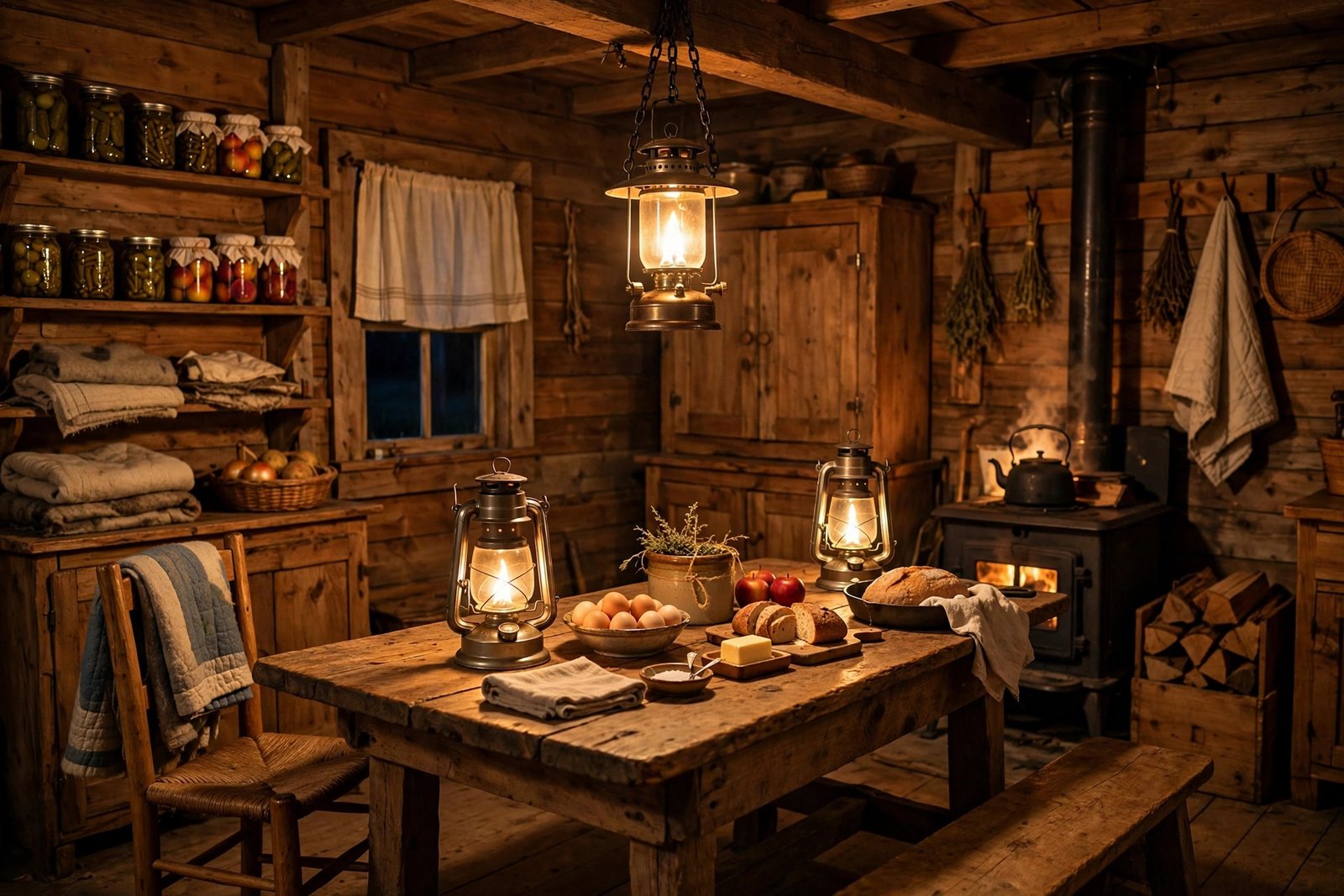
Refusing the grid doesn’t mean living in the dark. Amish households and businesses run on a patchwork of alternatives, chosen to preserve independence:
- Propane and natural gas — the workhorses. Gas powers refrigerators, stoves, water heaters, and the bright mantle lamps that light Amish homes after dark.
- Diesel generators and batteries — many workshops run generators, and 12-volt battery systems power lights and small equipment.
- Solar panels — increasingly common, and fully in keeping with the rules: the panels belong to the family, produce no monthly bill, and connect to nothing outside the farm.
- Pneumatic and hydraulic tools — Amish woodshops famously run air-powered tools off a diesel compressor, turning out fine furniture without a single grid connection.
- Kerosene lamps — the classic image, still in use but gradually giving way to gas and battery lighting.
Notice the pattern: every one of these keeps the household self-sufficient. The question the Ordnung asks isn’t “is this modern?” but “does this make us dependent on the world?” That’s the real answer to why don’t the amish use electricity: it’s not the power they reject, but the dependence.
Where They Draw the Line: Cars, Phones, and Tractors
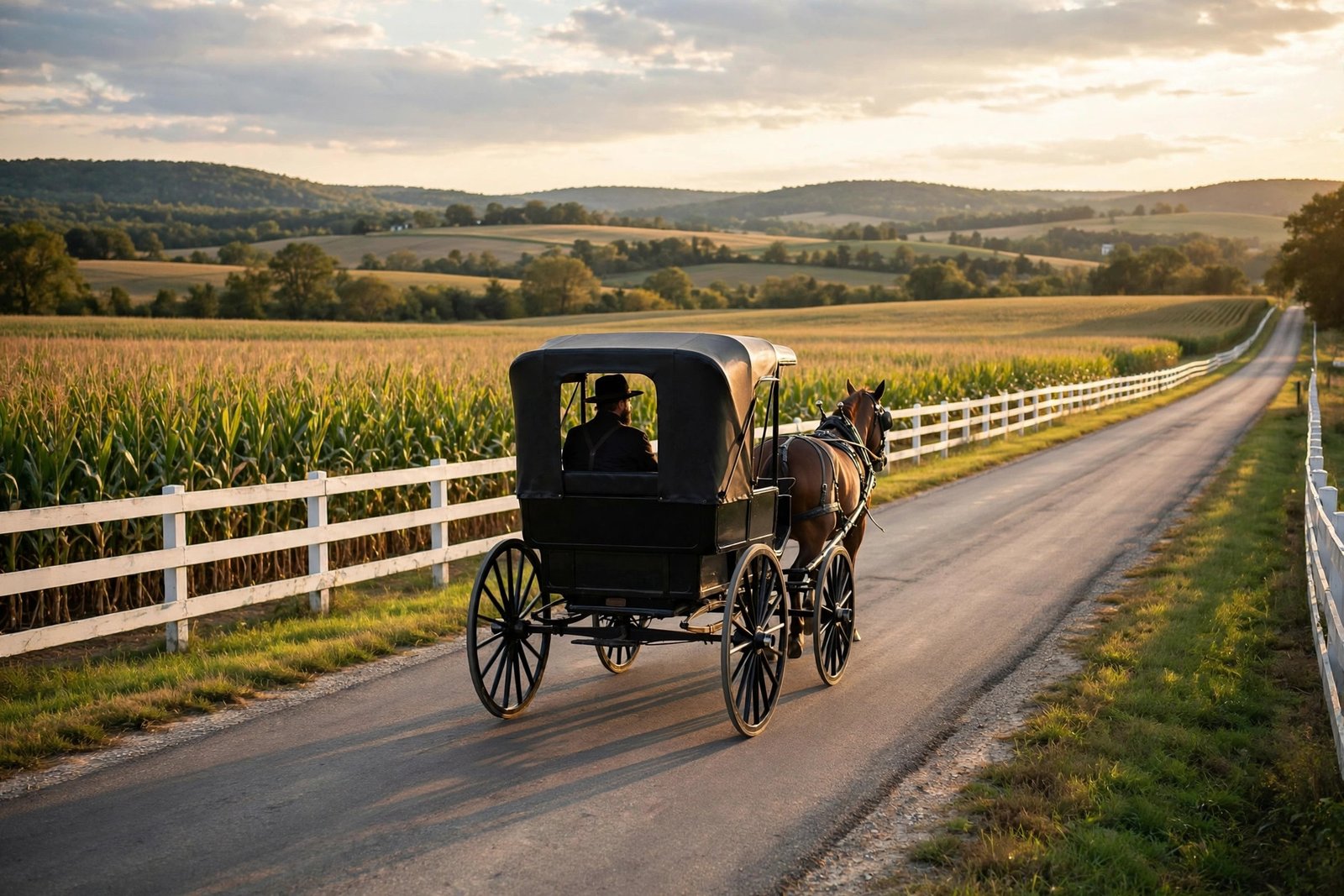
The same logic explains the rules that puzzle visitors most. Cars are rejected less because of engines and more because of what cars do: they scatter a community across distances, making it easy to live far from church and family. The horse and buggy keeps life local by design.
Telephones followed a similar path. For decades, many districts forbade phones in the home but permitted a shared phone shanty at the end of the lane for business and emergencies — close enough to use, inconvenient enough not to dominate home life. Today, many Amish business owners carry cell phones for work, kept outside the house. The line keeps moving, but the principle holds: technology that serves the community’s work is weighed differently than technology that invades the home.
Even tractors tell the story. Many Old Order farmers use tractors for field work — but with steel wheels instead of rubber tires. The steel wheels are deliberately impractical for road travel: a tractor that can’t comfortably drive to town stays a farm tool instead of becoming a car. The same question — why don’t the amish use electricity — gets the same answer everywhere: does it keep the community together, or pull it apart?
Visiting Ohio’s Amish Country Respectfully
Holmes County and the surrounding counties welcome millions of visitors a year, and the Amish-run shops, bakeries, and furniture stores are genuinely worth the trip. A few courtesies go a long way:
- Don’t photograph people without permission. Many Amish believe posed photographs violate the biblical command against graven images. Ask first — and accept no gracefully.
- Give buggies space. Pass slowly and widely; a spooked horse is dangerous for everyone.
- Shop on their terms. Most Amish businesses close on Sundays, and many don’t take credit cards. Bring cash and plan accordingly.
So why don’t the Amish use electricity? Because for them, the grid was never just about power. It was about staying a people apart — and that choice is still holding.
