Do Amish eat pork? Yes — pork is a staple of traditional Amish cooking. From butchering day to the smokehouse, pork shows up across the Amish table in ways that might surprise you. Here’s what Amish families actually eat — and why pork plays such a big role.
Do Amish Eat Pork? Yes — Here’s Why
There’s no religious prohibition on pork in Amish belief. The Amish read the same New Testament as other Christians, which places no dietary restrictions on pork — and historically, pork was the most practical meat for a farming family. Pigs are efficient to raise, every part of the animal gets used, and pork cures and smokes beautifully for winter storage. For a community built on self-sufficiency, the pig was the perfect farm animal.
Butchering Day: A Community Event
Traditionally, hog butchering happens in late fall, when cool weather makes the work safe. It’s a family — often multi-family — affair: the animal is processed in a single day, and almost nothing goes to waste. Fresh pork becomes roasts and chops for the freezer; trimmings become sausage; fat becomes lard for baking (Amish pie crusts made with lard are legendary); and the head and scraps become ponhoss (also spelled pannhaas) — a scrapple-like loaf of pork, cornmeal, and spices, sliced and fried crisp for breakfast.
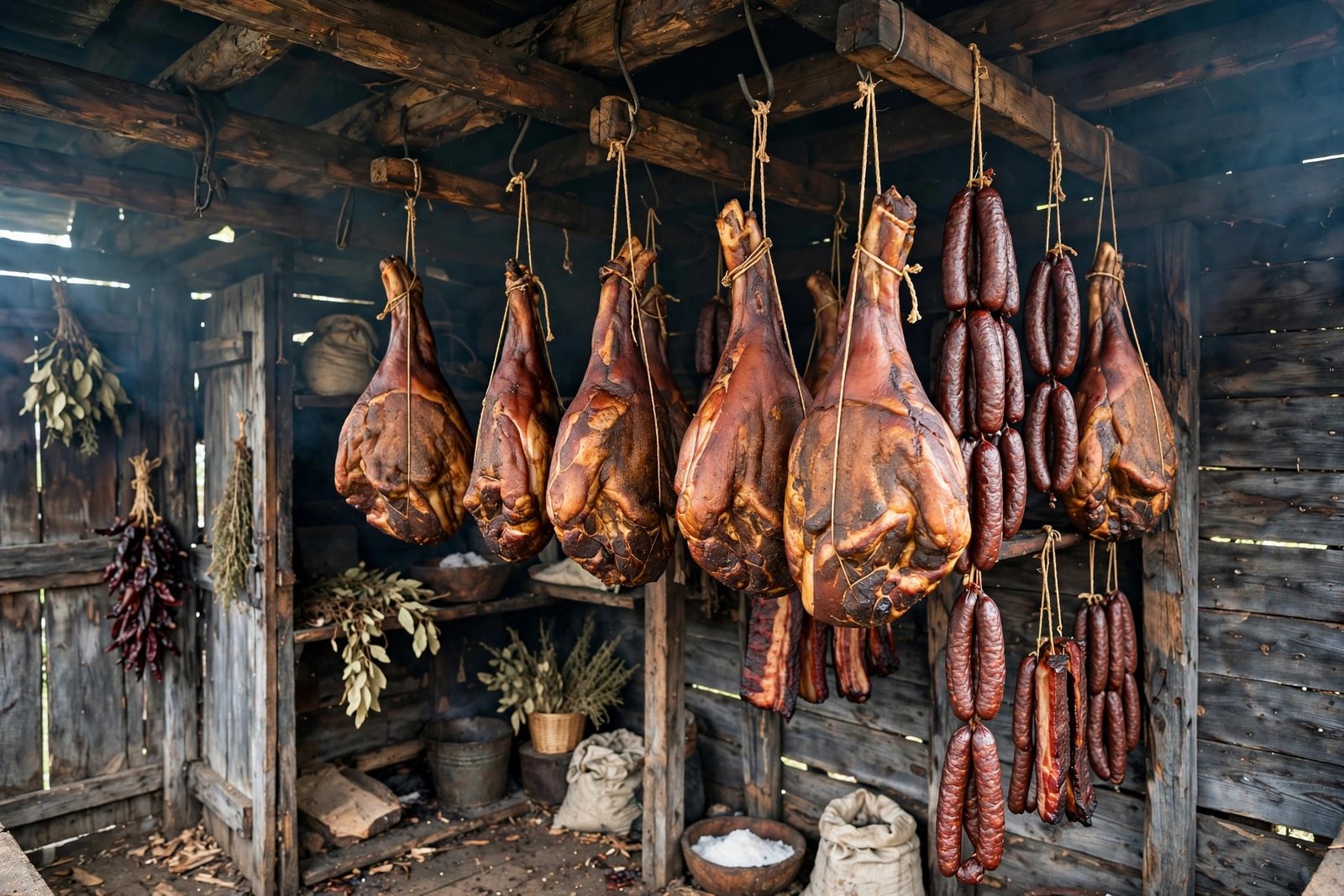
Classic Amish Pork Dishes
- Pork and sauerkraut — the centerpiece of many Amish New Year’s meals, served for good luck.
- Smoked ham — hickory-smoked hams are a point of pride and a common gift.
- Pork sausage — homemade breakfast sausage, often seasoned simply with sage and pepper.
- Ponhoss (scrapple) — fried slices of the pork-and-cornmeal loaf, a butchering-day tradition.
- Pickled pork — pickled pigs’ feet and pickled pork hocks show up on relish trays.
- Bacon and salt pork — used for seasoning green beans, soups, and fried potatoes.
What Else Is on the Amish Table
Pork is central, but the Amish table is broader than any single meat:
- Chicken and beef — roast chicken, chicken pot pie, and beef roasts are weekly staples.
- Garden produce — massive gardens supply sweet corn, green beans, tomatoes, and potatoes, much of it canned for winter.
- Chow-chow — the famous pickled vegetable relish, served alongside nearly everything.
- Baked goods — shoofly pie, whoopie pies, fry pies, cinnamon rolls, and bread baked in quantity.
- Dairy — many families keep cows; fresh milk, butter, and cheese are everyday foods.
Do All Amish Eat Pork?
As a community, yes — but individuals vary, just like anywhere else. Some Amish families eat less meat for health reasons, and younger Amish are as exposed to modern nutrition ideas as anyone. What doesn’t vary much is the food culture itself: generous portions, everything homemade, and hospitality that treats a guest at the table as a blessing, not a burden.
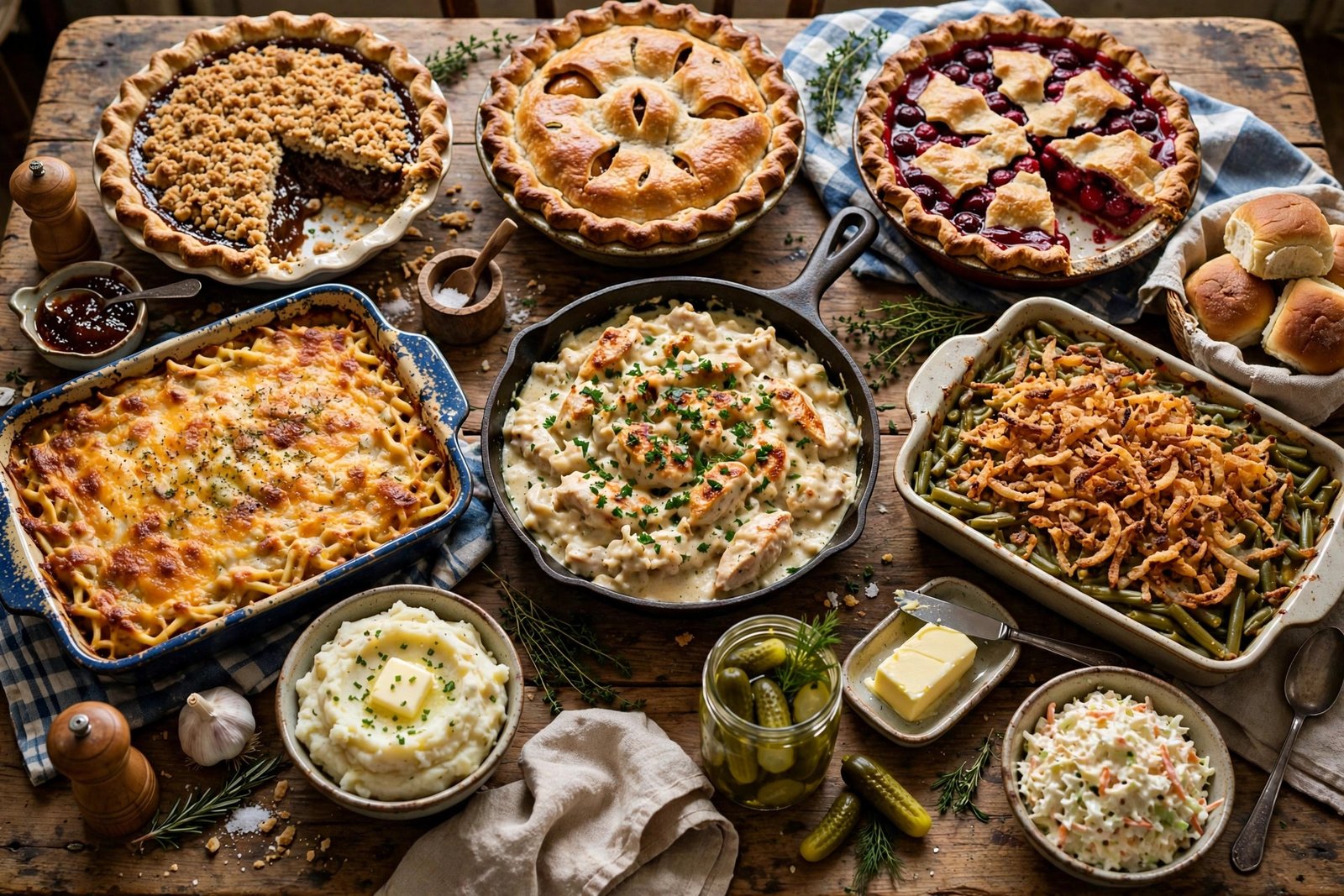
Tasting It Yourself
Ohio’s Amish Country — especially Holmes County — is full of restaurants and bakeries serving this food to visitors: family-style restaurants with pork roast and dressing, bakeries with fry pies by the dozen, and cheese shops with smoked meats. Go hungry. Bring a cooler — you’ll want to take some of it home with you.
So: do Amish eat pork? Enthusiastically — and if you get the chance to try ponhoss fried crisp with apple butter, take it.
Pork in Amish Food Businesses
Walk through any Amish-run market in Holmes County and pork is everywhere: summer sausage and ring bologna at the deli counter, smoked hams at the meat stand, and pork barbecue at the food stalls during benefit auctions. Many Amish families earn part of their living selling exactly the foods they eat at home — so when you buy Amish pork products, you’re tasting the real household tradition, not a tourist version of it.
