How far is Cleveland, Ohio from me? It depends where you’re starting — but Cleveland sits on the southern shore of Lake Erie in northeast Ohio, roughly a half-day drive from most Midwestern and mid-Atlantic cities. Below are the straight-up driving distances and times from the places people ask about most.
How Far Is Cleveland, Ohio From Me? Driving Distances From Major Cities
These are approximate highway miles and drive times in normal traffic:
- Columbus, OH — 143 miles, about 2 hours 15 minutes (I-71 N)
- Cincinnati, OH — 250 miles, about 3 hours 45 minutes (I-71 N)
- Pittsburgh, PA — 135 miles, about 2 hours 10 minutes (I-76 W / Ohio Turnpike)
- Detroit, MI — 170 miles, about 2 hours 40 minutes (I-75 S to Ohio Turnpike)
- Indianapolis, IN — 285 miles, about 4 hours 20 minutes (I-70 E to I-71 N)
- Chicago, IL — 350 miles, about 5 hours 15 minutes (I-90 E / Ohio Turnpike)
- Louisville, KY — 380 miles, about 5 hours 45 minutes (I-71 N)
- Nashville, TN — 550 miles, about 8 hours (I-65 N to I-71 N)
- Washington, DC — 370 miles, about 5 hours 45 minutes (I-70 W)
- New York City, NY — 460 miles, about 7 hours (I-80 W / Ohio Turnpike)
- Buffalo, NY — 190 miles, about 2 hours 50 minutes (I-90 W)
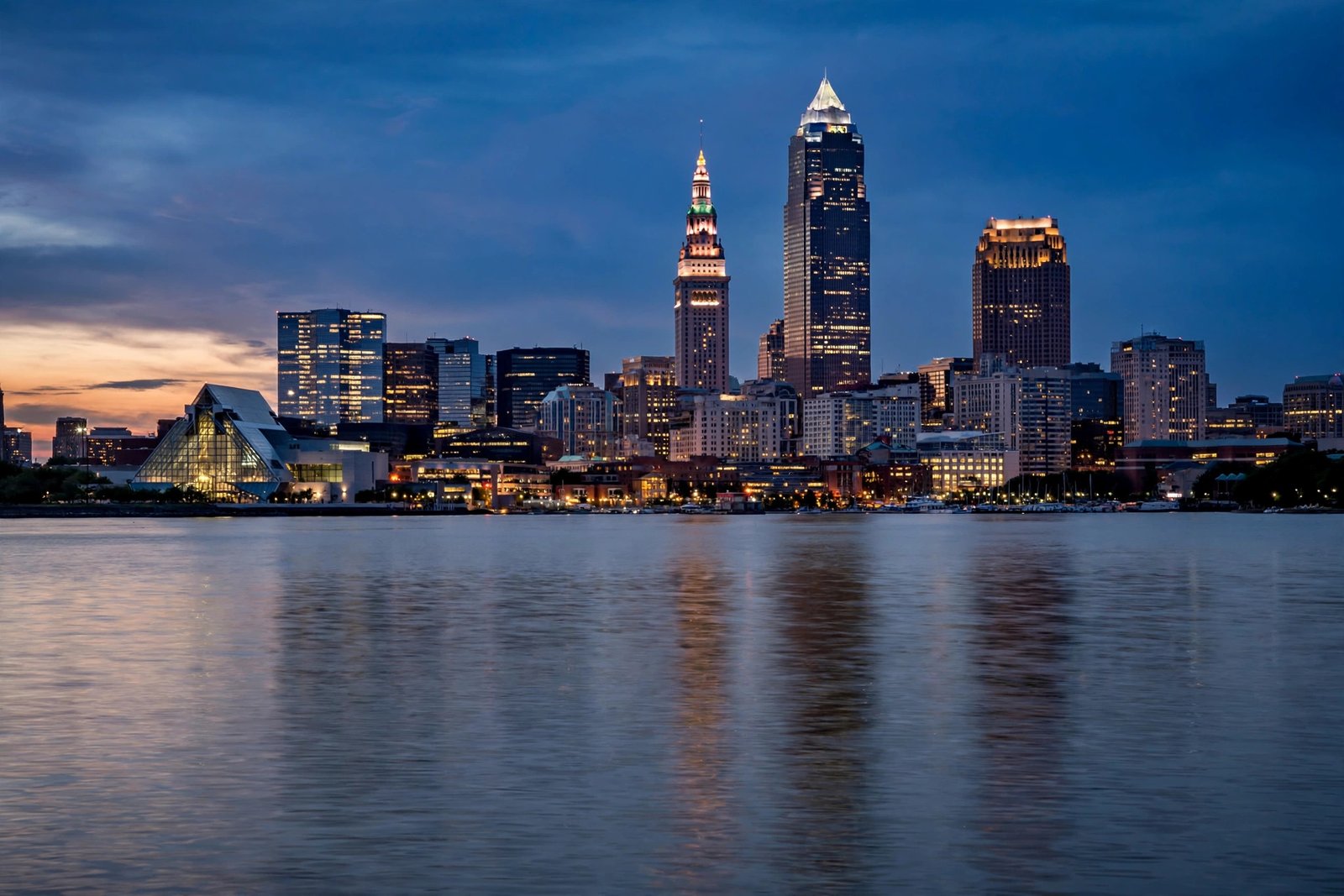
The Fastest Routes Into Cleveland
Three corridors handle most traffic into the city. From the south (Columbus, Cincinnati), I-71 runs straight up into downtown. From the east (Pittsburgh, New York), the Ohio Turnpike (I-80/I-90) is the fastest tolled route — budget a few dollars in tolls. From the west (Chicago, Detroit), I-90 along the Lake Erie shoreline brings you in past the western suburbs.
One local tip: lake-effect weather. Between November and March, bands of snow off Lake Erie can slow the I-90 corridor significantly, especially east of the city. In winter, build in an extra 30–60 minutes and check conditions before you leave.
Flying vs. Driving to Cleveland
If you’re more than about 5 hours out, flying into Cleveland Hopkins International Airport (CLE) usually wins. It’s one of the few U.S. airports with a direct rapid-transit rail link downtown — the RTA Red Line runs from the terminal to Tower City in about 25 minutes for a couple of dollars. For trips under 3 hours, driving is almost always faster door-to-door once you count airport time.
Ohio Turnpike Tolls: What to Budget
If you’re coming from the east or west, you’ll likely use the Ohio Turnpike (I-80/I-90) — and it isn’t free. Passenger-car tolls run roughly $10–$20 depending on how far you travel on it, with E-ZPass paying less than cash or pay-by-plate. The Turnpike’s service plazas are genuinely good (food, fuel, clean restrooms), so the toll buys a fairly painless drive. From the south on I-71, there are no tolls at all. For official road and travel information, visit the Ohio.gov official state resources.
Where Cleveland Sits in Ohio
Cleveland anchors Ohio’s northeast corner on Lake Erie, about 60 miles west of the Pennsylvania border. It’s the center of Greater Cleveland — roughly 2 million people across Cuyahoga and surrounding counties — and the largest metro area on Lake Erie in the United States. From downtown, you’re about 30 minutes from Cuyahoga Valley National Park to the south and under an hour from the Lake Erie Islands ferries at Sandusky in summer. Beyond the drive itself, see what Ohio is known for, from Lake Erie sunsets to its eight U.S. presidents.
Bottom Line
Timing Your Arrival
Cleveland’s rush hours are concentrated and predictable: I-71 and I-77 slow noticeably between 7:30–9:00 AM and 4:30–6:30 PM on weekdays, and downtown event traffic — Browns Sundays at the lakefront stadium, Guardians home games, big concerts at Rocket Arena — can lock up the surrounding streets an hour before first pitch. If your drive ends downtown, aim to arrive mid-morning or early afternoon and you’ll glide in. Parking downtown is plentiful by big-city standards; most garages near Public Square and the lakefront run about $15–$25 for the day.
For most Ohioans, Cleveland is a 2–4 hour drive; for the broader Midwest and mid-Atlantic, it’s a comfortable half-day trip. Punch your starting point into a maps app the morning you leave — lake-effect snow and Turnpike construction are the two things most likely to change your ETA.
