Do Amish drive cars? As a rule, no — Old Order Amish don’t own or drive cars, and the horse-drawn buggy remains one of their most recognizable traditions. But the full answer has more nuance than most visitors expect, because “the Amish” isn’t one uniform group.
Do Amish Drive Cars? The Short Answer: Buggies, Not Cars
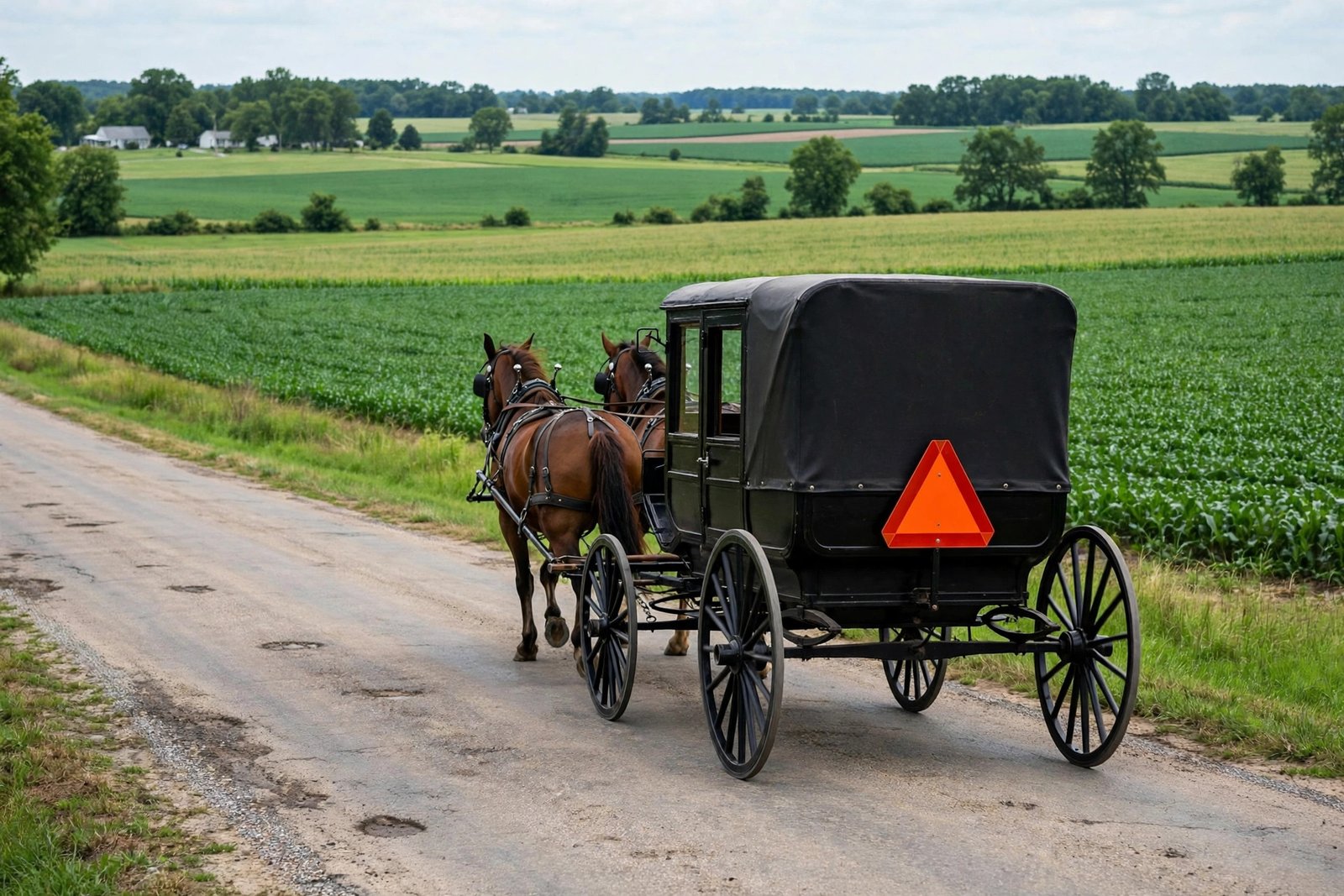
For Old Order Amish — the group most people picture, and the largest Amish population in Ohio’s Holmes County — owning and driving a car is prohibited by the Ordnung, the community’s unwritten set of rules. Instead, families travel by horse-drawn buggy: typically an enclosed gray or black buggy for everyday use, good for about 8–10 miles of local travel.
The reasoning isn’t that cars are “evil.” The Amish evaluate technology by whether it strengthens or weakens family and community life (the same principle behind why the Amish limit technology like electricity). Cars, in their view, make it too easy to scatter — to work far away, to leave the community for entertainment, to live at a pace that frays close-knit ties. The buggy keeps life local by design.
The Nuance: Riding in Cars Is Different From Driving
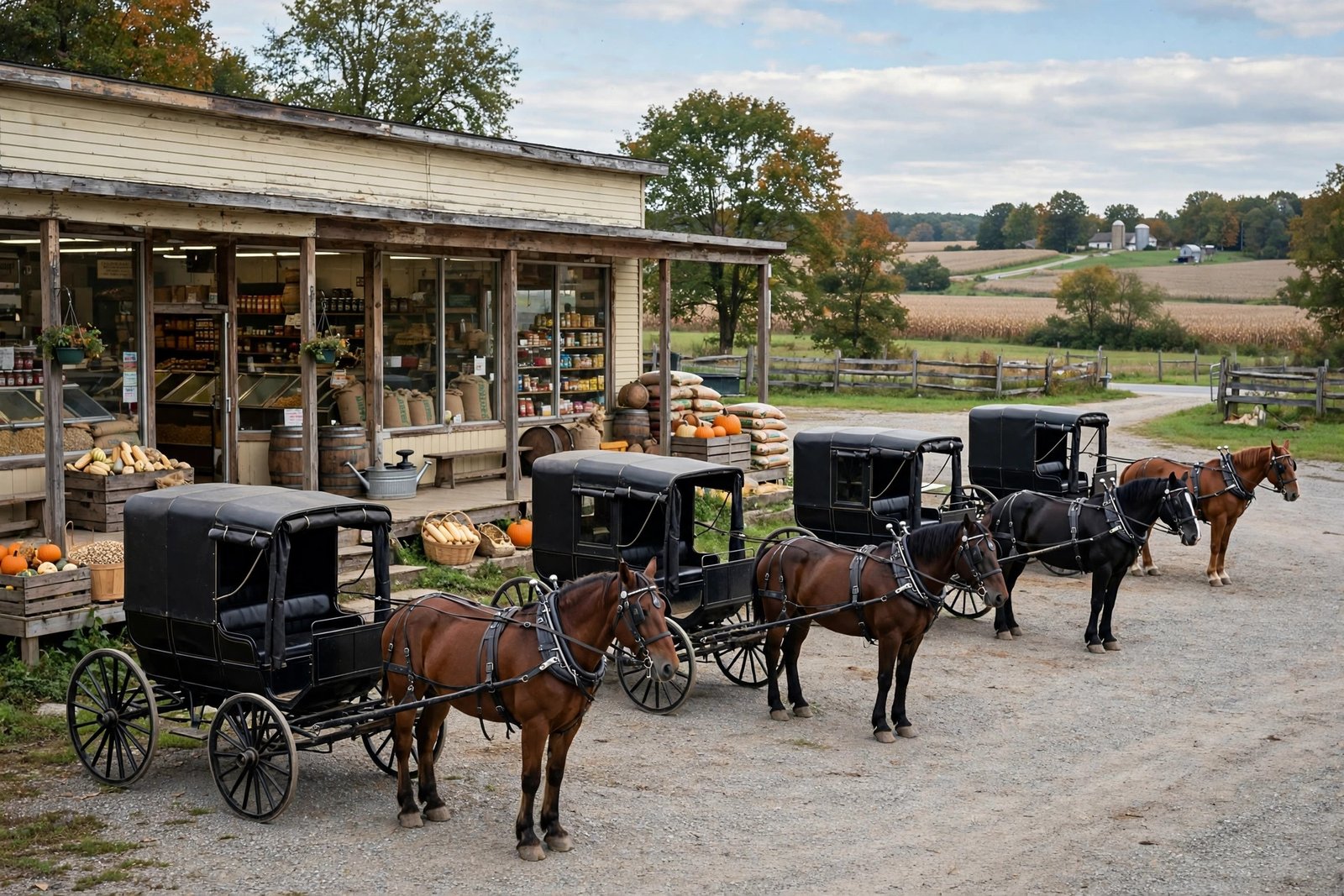
Here’s what surprises most visitors: while Old Order Amish won’t own cars, most will ride in them. Hiring a non-Amish driver — often called an “Amish taxi” — is completely normal for longer trips: medical appointments, bulk shopping, visiting family in another settlement. You’ll see buggies parked at the grocery store and vans hired for the longer hauls, sometimes in the same afternoon.
This isn’t hypocrisy; it’s the actual rule. The Ordnung restricts ownership and driving, not riding. The distinction keeps the community’s daily rhythm local while allowing practical exceptions.
Not All Amish Groups Agree
The Amish are more diverse than the stereotype suggests — and the answer to “do Amish drive cars?” changes with the group:
- Old Order Amish — no car ownership or driving; buggies for daily travel
- New Order Amish — similar vehicle restrictions, sometimes slightly more lenient on technology elsewhere
- Beachy Amish — most drive cars (usually plain black ones) and use electricity; they split from the Old Order in the 1920s
- Amish Mennonites — drive cars and live much like conservative Mennonites
So if you see a plain-dressed family getting out of a car in Ohio, you’re probably looking at Beachy Amish or Mennonites — not Old Order Amish breaking the rules.
Why Ohio Buggies Are Gray
Sharp-eyed visitors notice that Holmes County buggies are gray — while Lancaster County, Pennsylvania buggies are famously black. The color is one of the markers of church affiliation: gray-top buggies are the Old Order norm in Ohio, and different settlements use different colors and styles the way sports fans wear different jerseys. It’s a visible reminder that “the Amish” is really dozens of distinct communities, each with its own Ordnung and its own look.
Driving Near Buggies: What to Know
If you’re touring Amish Country, you’ll share the road with buggies — and a little care goes a long way. Slow down well before passing, give the full lane when you do, and never honk right behind a horse; a startled horse can swerve into traffic. At night, buggies carry battery-powered lights and reflective slow-moving-vehicle triangles, but they’re still far less visible than a car. Most buggy-car collisions happen at dawn, dusk, or on hills — exactly when you should be most alert.
The Bottom Line
Do Amish drive cars? The Old Order Amish you’ll meet in Ohio’s Amish Country don’t — but they’ll happily hire your van for the trip to the dentist. The buggy isn’t about rejecting the modern world wholesale; it’s about choosing, deliberately, which parts of it to let in.
And practically speaking, the system works because the community is built around it. Amish businesses cluster along routes their buggies can cover, neighbors share hired drivers for the long hauls, and the local economy — bulk food stores, harness shops, buggy builders — exists to keep the horse-drawn world running. The next time a gray buggy trots past your car on a Holmes County back road, you’re not watching a rejection of modern life. You’re watching a community that decided exactly how much of it to accept — and built everything else around the horse.
