Can you swim in Lake Erie? Absolutely — Ohio’s Great Lake shoreline has real sand beaches, state park swim areas, and island getaways. But Lake Erie has a few quirks worth knowing before you dive in, from water quality advisories to the best beaches in the state. Here’s the honest guide.
Can You Swim in Lake Erie? Yes — at Designated Beaches
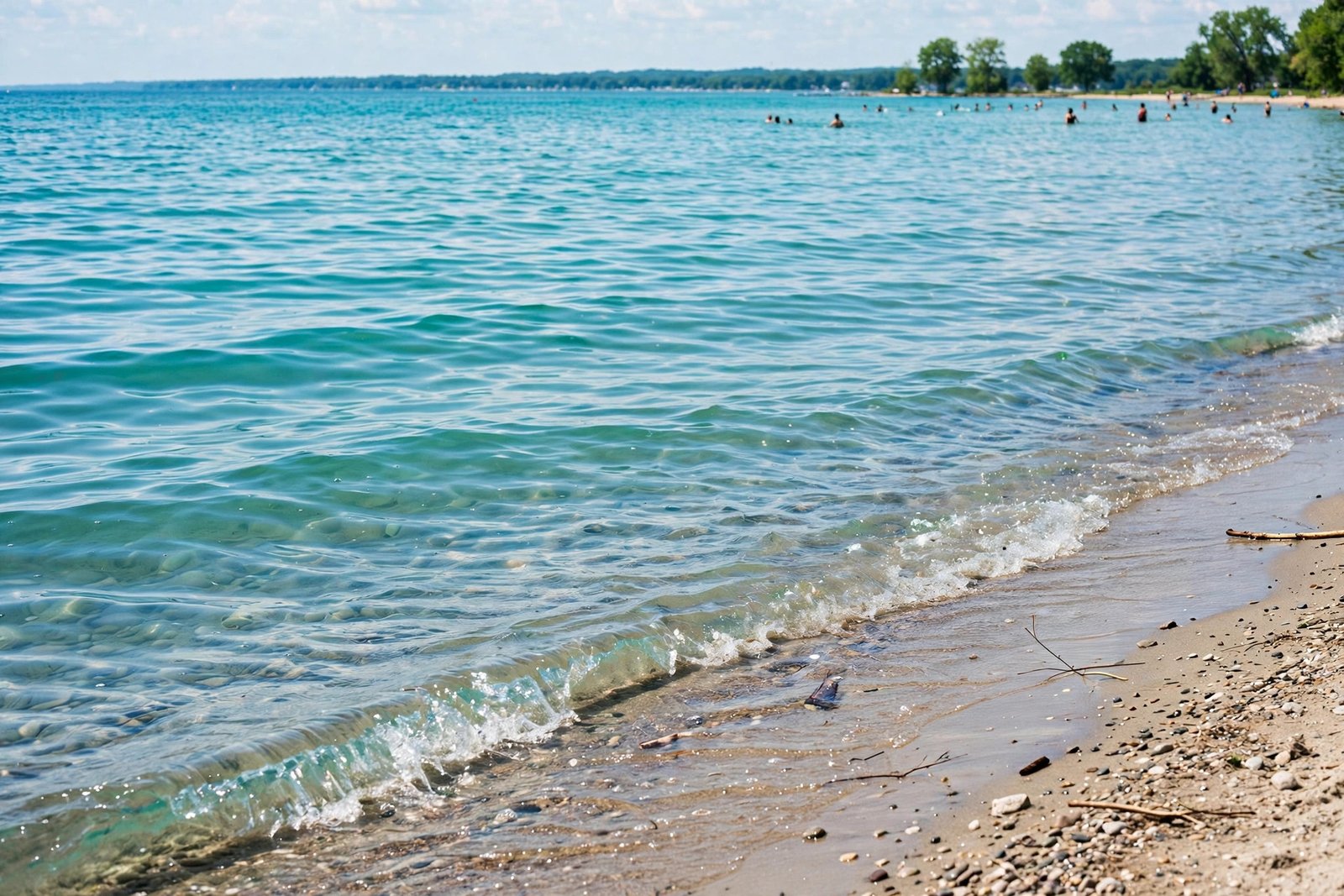
Lake Erie is the shallowest and warmest of the Great Lakes, which makes it Ohio’s best swimming lake by far. The Ohio shoreline has a string of public beaches, and swimming is permitted at all of them — with the usual common-sense rules about swimming where lifeguards or designated areas exist.
Top Lake Erie swimming beaches in Ohio:
- Headlands Beach State Park (Mentor) — the longest natural sand beach in Ohio, about a mile of shoreline.
- Maumee Bay State Park (Oregon, near Toledo) — a big sandy beach on the western basin with a lodge and campground.
- East Harbor State Park (Marblehead) — a 1,500-foot sand beach popular with families.
- Geneva State Park (Geneva-on-the-Lake) — swimming beach plus the classic lakeside resort town.
- Nickel Plate Beach (Huron) — a local favorite with a wide sandy shore.
- Kelleys Island State Park — swim off the island’s north-shore beach after the ferry ride over.

Water Quality: What to Check Before You Go
Here’s the part that matters for anyone asking ‘can you swim in Lake Erie’. Lake Erie is swimmable, but conditions vary — and the lake’s western basin has a well-known late-summer issue: harmful algal blooms. Warm, calm water in July through September can trigger blooms that produce microcystin, a toxin that irritates skin and is unsafe to swallow.
Before any Lake Erie swim, check the Ohio Department of Health’s BeachGuard program, which posts current water quality advisories and bacteria (E. coli) monitoring results for public beaches. One quick check answers ‘can you swim in Lake Erie’ on any given day. A few rules of thumb:
- Don’t swim where an advisory is posted — they’re there for a reason.
- Avoid swimming right after heavy rain — runoff spikes bacteria levels at most beaches.
- Don’t swallow the water, especially in the western basin in late summer.
- Watch kids closely — Lake Erie can develop sudden wave action and localized currents near piers and breakwalls.
When Is the Water Warm Enough?
Lake Erie’s shallow depth means it warms faster than the other Great Lakes, but it’s still a Great Lake. Water temperatures typically reach the comfortable range — low to mid 70s — from late June through August, with July and August the warmest. June can be brisk, and by mid-September most swimmers have called it a season. So if you’re asking ‘can you swim in Lake Erie,’ aim for July or August.
Beyond the Mainland Beaches
For something different, take a ferry to the Lake Erie islands. Put-in-Bay on South Bass Island and Kelleys Island both offer swimming spots with a vacation feel — and the water around the islands tends to be clearer than the mainland western basin. Pair a swim with the island wineries, the Perry’s Victory monument, and the glacial grooves on Kelleys Island.
So yes — you can swim in Lake Erie, and Ohio’s shoreline does it well. Pick a beach, check BeachGuard the morning of your trip, and enjoy the warmest swimming of any Great Lake.
Lake Erie Swimming FAQ
Is Lake Erie clean enough to swim in? Generally, yes — at monitored public beaches during the summer season. Water quality is tested regularly, and advisories are posted when bacteria levels spike. The lake is far cleaner than it was in the 1960s and 70s, when it was famously declared “dead.”
Are there sharks in Lake Erie? No. The only things to watch for are the occasional algal bloom advisory and standard open-water caution around waves and currents.
Can you swim in Lake Erie in October? You can, but you probably won’t want to. By October, surface temperatures drop into the 50s and 60s — fine for a polar-plunge dare, not for a leisurely swim. Plan beach trips for late June through August.
