Ohio parents hear a lot of conflicting advice about when a child can stop using a booster seat, so let’s settle it with the actual statute. The laws for booster seats in ohio are found in Ohio Revised Code 4511.81, and they boil down to a simple formula many safety advocates call the “4-8-4’9 rule.” It covers which seat your child must ride in at each age and size, what happens if you get it wrong, and who is legally on the hook. Here is the complete breakdown of Ohio’s booster seat rules for 2026, plus the safety best practices that go beyond what the law requires.
Laws for Booster Seats in Ohio: The 4-8-4’9 Rule
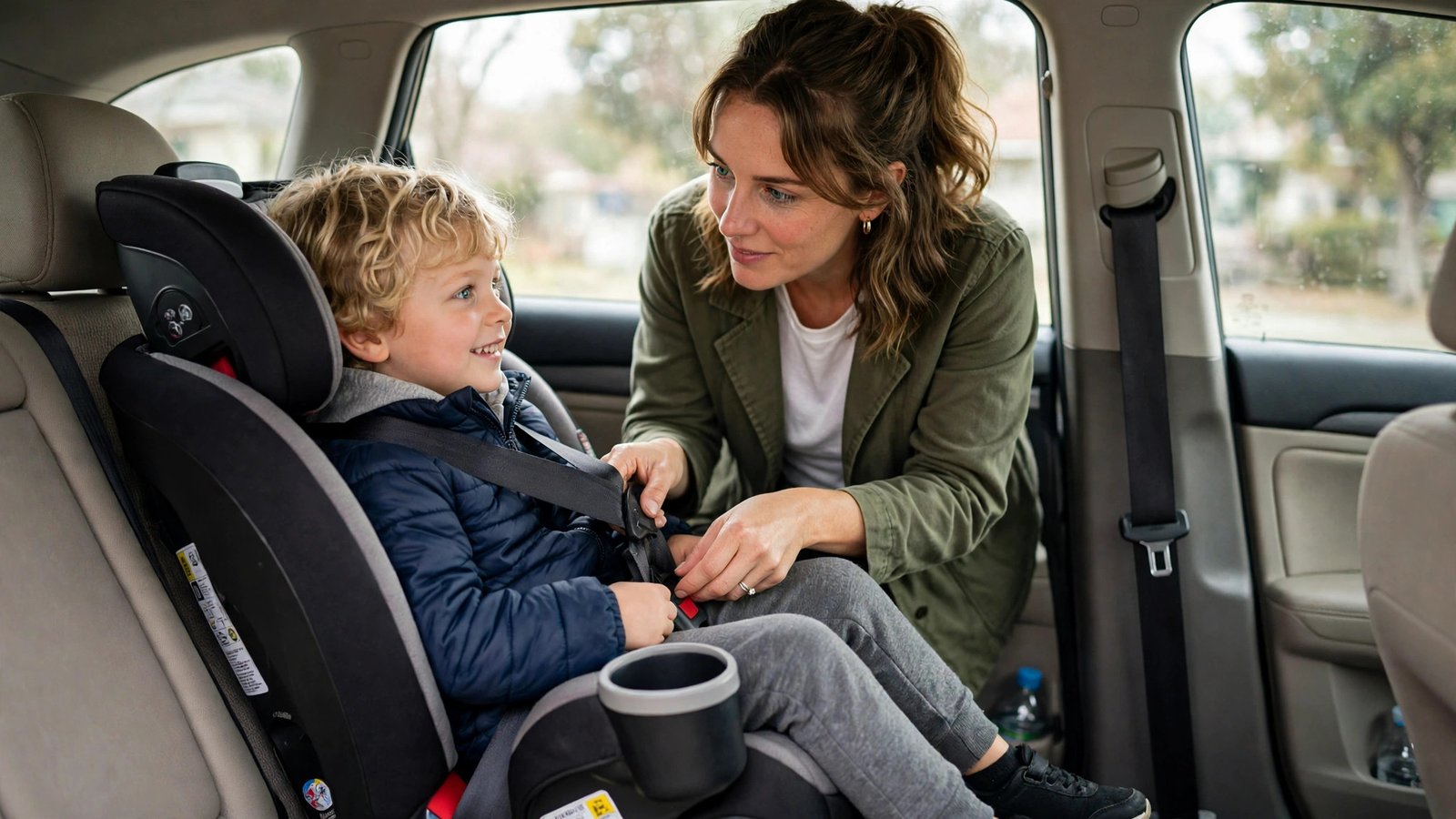
Ohio’s child passenger safety law works in three tiers. First, any child under four years old — or under 40 pounds regardless of age — must ride in a child restraint system, meaning a harnessed car seat appropriate for the child’s size. Second, a child who is under eight years old AND under 4 feet 9 inches tall, and who has outgrown the harnessed seat, must ride in a booster seat. Both conditions apply: a seven-year-old who is already 4’9″ has aged out of the booster requirement, while a tall eight-year-old is covered by the next tier.
Third, children ages eight through fifteen must be secured in a seat belt or an appropriate child restraint. In other words, Ohio law keeps children in some form of restraint all the way through age fifteen — there is no point at which a young teen may legally ride unrestrained. Note that age and height work together in the booster tier: the law looks at both, so measure your child rather than guessing.
Fines and Penalties for Violations
Violating Ohio’s child restraint law is not just a warning-level offense. A first offense is a minor misdemeanor carrying a fine of $25 to $75. A repeat offense escalates significantly: up to $250 in fines and as many as 30 days in jail. Courts treat repeat violations seriously because the stakes — a child’s life in a crash — are so high.
Crucially, the driver is legally responsible for making sure every passenger through age fifteen is properly restrained. That means if you are driving with someone else’s child in the back seat, the ticket is yours, not the parent’s. Grandparents, babysitters, carpool drivers, and older siblings behind the wheel all carry the same responsibility. When in doubt, buckle every kid, every trip — short drives around the neighborhood are where a surprising share of crashes happen.

Beyond the Law: Safety Best Practices
The statute sets the legal minimum, but safety experts recommend going further. The gold standard for deciding whether a child is truly ready to ride without a booster is the five-step seat belt fit test: the child’s back rests flat against the vehicle seat, knees bend naturally at the seat edge, the lap belt sits low on the hips (not the belly), the shoulder belt crosses the middle of the chest and shoulder (not the neck), and the child can stay in that position for the whole ride. Most children do not pass all five steps until somewhere between ages 10 and 12 — well past Ohio’s legal minimum.
- Use high-back boosters in vehicles with low seat backs or no headrests, so the child’s head and neck are supported.
- Always use lap AND shoulder belts with a booster — never a lap belt alone, which can cause serious abdominal injuries in a crash.
- Keep boosters in the back seat: children under 13 should always ride in the back, away from active front airbags.
- Check the manuals: both your vehicle owner’s manual and the booster seat manual specify weight, height, and installation requirements.
- Consult the experts: NHTSA’s car seat guidance offers detailed recommendations by age and size from the National Highway Traffic Safety Administration.
Choosing and Installing the Right Booster
Not all boosters fit all children or all vehicles. High-back boosters provide head and neck support and belt-positioning guides, making them the better choice for younger booster-age children and cars without adequate headrests. Backless boosters are more portable and work well for older, taller children in vehicles with proper head restraints. Whichever type you choose, the booster must be used with a lap-and-shoulder belt, the child must meet the seat’s minimum weight and height, and the belt guides must position the belts exactly as described in the five-step test.
Replace any booster that has been in a moderate or severe crash, and check the seat’s expiration date — most expire six to ten years after manufacture. Buckled up and ready? Check driving distances across Ohio for your next family road trip.
