Bringing a newborn home from an Ohio hospital means answering a question every parent faces in the parking lot: is the car seat installed right, and is it the right seat under the law? The ohio infant car seat laws are found in Ohio Revised Code 4511.81, and they are stricter than many parents expect — children under four years old or under 40 pounds must ride in a child safety seat, with rear-facing required through the earliest years. This guide covers exactly what the law demands, the rear-facing best practices pediatric experts recommend on top of it, and the common mistakes that put infants at risk.
Ohio Infant Car Seat Laws: What the Statute Requires
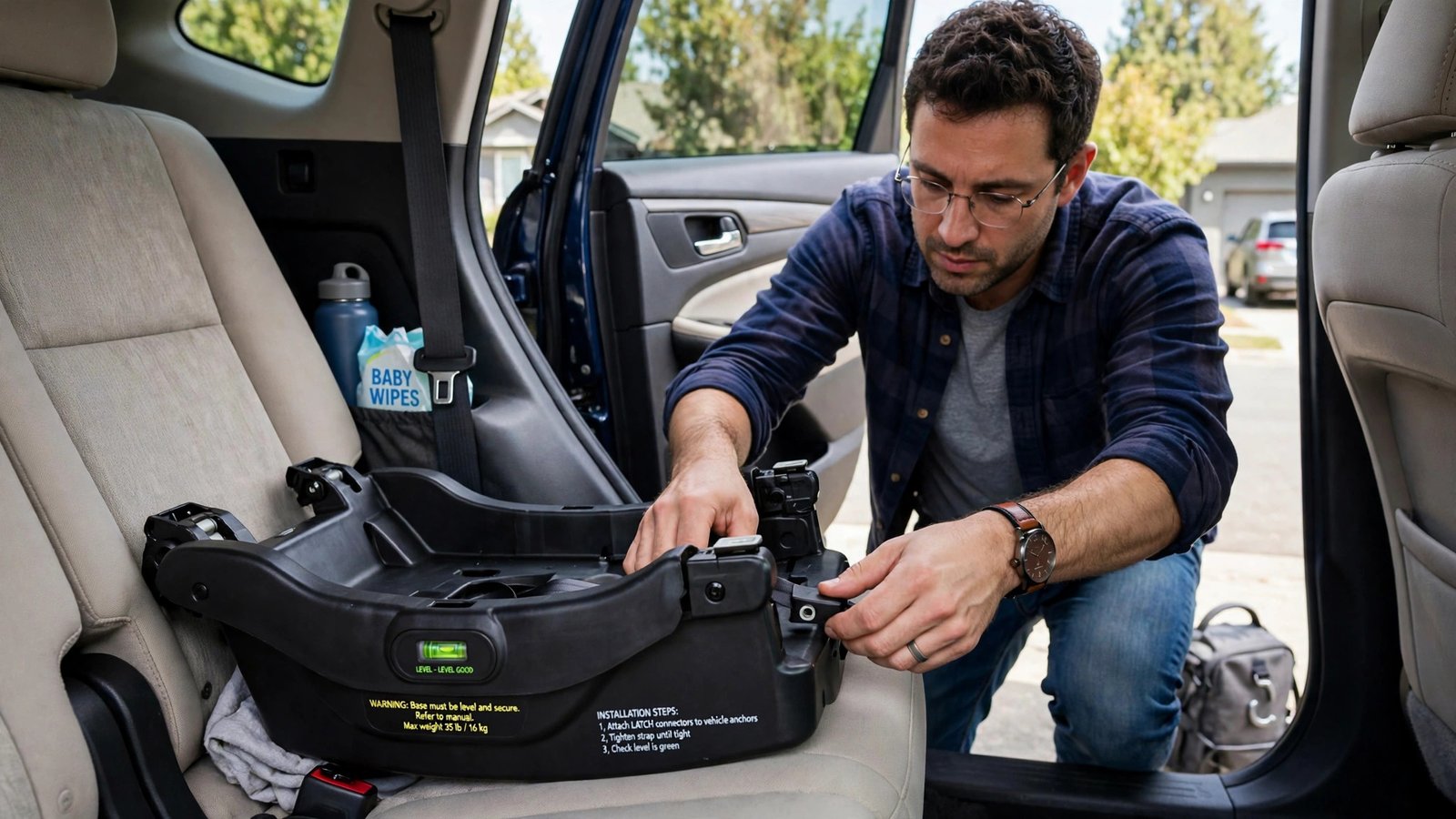
Under ORC 4511.81, any child under four years old OR under 40 pounds must ride in a child safety seat that meets federal safety standards — the “or” matters, so a small four-year-old under 40 pounds is still covered by the child-seat requirement. The seat must be used according to the manufacturer’s instructions, which means correct installation, correct harnessing, and a seat appropriate for the child’s weight and height. Violating the law is a minor misdemeanor on a first offense, with fines of $25 to $75, and the driver — not the parent, if they are different people — is legally responsible for the child’s restraint.
That is the legal floor. But the law’s minimums and the safety community’s recommendations are not the same thing, and for infants the gap between the two is where the most important decisions live. Every major safety authority — the American Academy of Pediatrics and the National Highway Traffic Safety Administration alike — says rear-facing longer than the legal minimum is one of the highest-impact choices a parent can make.
Rear-Facing: The Rule That Saves Lives
Best practice is clear: keep infants and toddlers rear-facing until at least age two, and ideally as long as the seat’s height and weight limits allow — many convertible seats now accommodate rear-facing well past age two. Rear-facing seats cradle a young child’s disproportionately large head and fragile neck and spine, spreading crash forces across the entire back of the seat instead of concentrating them on the neck. In a frontal crash, the most common and most severe type, that difference is enormous.
The absolute minimums are non-negotiable: never turn a child forward-facing before one year of age AND 20 pounds — both conditions must be met. But treat that as the floor you must never go below, not the target. Parents sometimes flip seats forward-facing at the first birthday because the child seems cramped or fussy; safety technicians consistently advise that a bent leg or a complaint is never a reason to turn a child around early. If your child has outgrown an infant bucket seat by height or weight before age two, move to a convertible seat and keep it rear-facing — that is exactly what convertible seats are designed for.

Back Seat, Airbags, and Installation Mistakes
Ohio’s back-seat guidance aligns with national recommendations: children under 13 should ride in the back seat, and a rear-facing seat must never be placed in front of an active airbag — a deploying airbag can kill an infant in a rear-facing seat. If your vehicle has no back seat or the back seat is unusable, consult both your vehicle manual and the car seat manual; some situations require deactivating the airbag, and the manuals spell out exactly when that is permitted.
- Register your seat with the manufacturer so you receive recall notices — and check for recalls on NHTSA, the National Highway Traffic Safety Administration.
- Check the expiration date: most car seats expire six to ten years after manufacture; an expired seat may no longer protect as designed.
- Harness snugly: straps should lie flat with no slack — if you can pinch the webbing at the shoulder, it is too loose — and the chest clip belongs at armpit level.
- No bulky coats: puffy winter jackets create dangerous slack in a crash; buckle the harness snugly over thin layers and lay the coat over the top.
- Get a free inspection: certified Child Passenger Safety Technicians check installations at inspection stations across Ohio — a second set of trained eyes catches mistakes most parents miss.
After a Crash and Moving Up the Ladder
Replace any car seat involved in a moderate or severe crash, even if it looks undamaged — the energy-absorbing materials inside may be compromised. (NHTSA defines narrow criteria under which a seat may be reused after a truly minor crash; when in doubt, replace it.) Keep the manual and proof of purchase, since insurers and manufacturers may ask for them.
As your child grows, Ohio’s restraint ladder continues: the harnessed seat until age four or 40 pounds, then a booster seat until age eight and 4’9″, then a seat belt through age fifteen. Each step up is a step down in protection, so delay every transition until your child genuinely outgrows the current seat’s limits. With the seat sorted, plan a day out — here are family-friendly things to do in Columbus.
