Effective January 1, 2026, the Ohio minimum wage 2026 is $11.00 per hour for non-tipped employees and $5.50 per hour for tipped employees. The new rate applies to employers with annual gross receipts over $405,000, and it continues Ohio’s constitutional requirement that the minimum wage adjust every January 1 based on inflation. If you earn minimum wage in Ohio — or you run a business that pays it — here’s exactly who is covered, who is exempt, and how the annual increase works.
The 2026 Rates at a Glance
Ohio sets two minimum wage tiers each year. For 2026:
- Non-tipped employees: $11.00/hour.
- Tipped employees: $5.50/hour, as long as the employee’s tips plus the hourly wage reach at least the full minimum wage of $11.00/hour. If tips fall short, the employer must make up the difference.
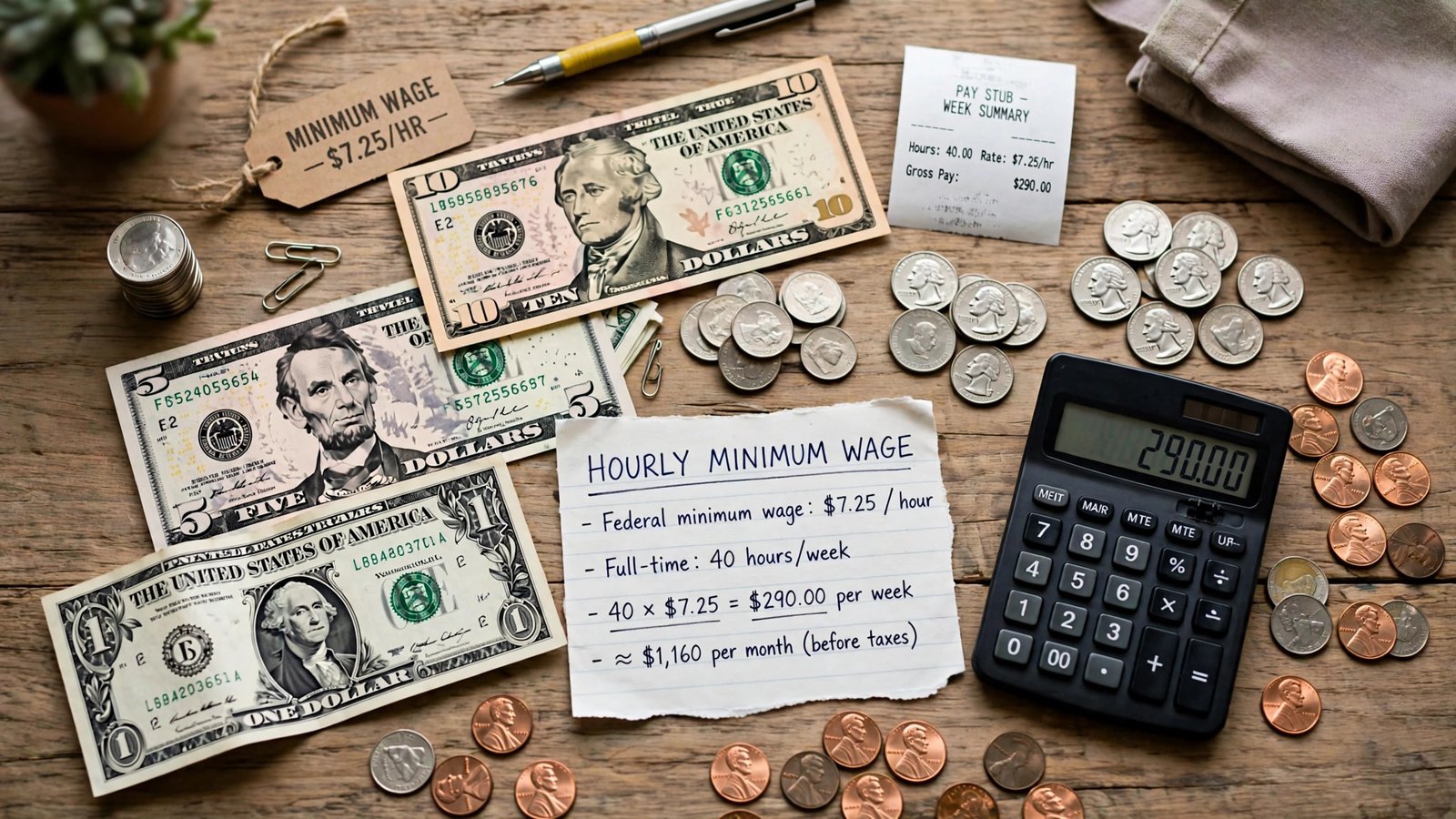
For context, the federal minimum wage remains $7.25 per hour — the rate that has been in place nationally since 2009. Ohio’s state minimum sits well above that floor, which means the state rate, not the federal one, governs covered employers. Any Ohio worker paid less than $11.00 per hour in 2026 (outside the exemptions below) is being underpaid under state law.
Who Is Covered: The $405,000 Threshold
The Ohio minimum wage 2026 rate doesn’t automatically apply to every employer in the state. Under Article II, Section 34a of the Ohio Constitution, the state minimum wage applies to employers with annual gross receipts exceeding $405,000. That threshold itself is adjusted for inflation each year, so it inches upward over time.
Employers at or below the $405,000 line — typically very small businesses — are instead subject to the federal minimum wage of $7.25 per hour. In practice, most Ohioans working at mid-size and larger employers are covered by the $11.00 rate. If you’re unsure whether your employer crosses the threshold, note that gross receipts means total revenue before expenses, not profit — far more small businesses clear that bar than you might expect.
Exemptions and Special Rates
A few categories of workers are carved out of the standard $11.00 rate:
- Workers age 14 and 15: may be paid the federal minimum wage of $7.25 per hour, even at larger employers. Ohio also follows federal child-labor rules on hours for this age group.
- Very small employers (at or below $405,000 in gross receipts): federal $7.25 applies.
- Tipped employees: $5.50/hour, with the employer required to ensure total compensation reaches $11.00/hour when tips are included.
Note that Ohio does not allow cities or counties to set their own higher minimum wages — the state preempts local minimum wage ordinances. That means Cleveland, Columbus, Cincinnati, and every other Ohio municipality must follow the statewide rate. This preemption keeps wage rules uniform across the state, so an employer with locations in multiple Ohio cities deals with one rate, not several.

How the Annual Increase Works
The Ohio minimum wage doesn’t move because the legislature votes on it each year — it moves because the Ohio Constitution requires it. Article II, Section 34a (added by voters in 2006) mandates that the minimum wage be adjusted every January 1 based on changes in the Consumer Price Index for Urban Wage Earners and Clerical Workers (CPI-W), the inflation measure that tracks prices faced by hourly workers.
This indexing is why Ohio’s minimum wage has risen steadily even without new legislation. It also gives everyone advance notice: the Ohio Department of Commerce publishes the new rate and the updated gross-receipts threshold each fall, so employers and workers know the January 1 figures months ahead. The 2027 rate is already on the schedule at $11.40 per hour, reflecting the ongoing CPI-W adjustment.
What Employers Must Do
For Ohio business owners, the January 1 change comes with compliance duties:
- Display the official 2026 poster. Employers must post the state’s minimum wage notice where employees can see it. You can download the official 2026 minimum wage poster from the Ohio Department of Commerce and print it for your workplace.
- Update payroll before the first January pay period. The $11.00/$5.50 rates apply to all hours worked on or after January 1, 2026 — not just paydays after that date.
- Recheck the tipped-employee math. If you take the tip credit, verify each pay period that every tipped worker’s tips plus the $5.50 hourly rate reach $11.00/hour, and make up any shortfall.
- Keep records. Ohio’s wage rules require employers to maintain payroll records that document hours worked and wages paid, so the state can verify compliance.
Employees who believe they’ve been underpaid can file a wage complaint with the Ohio Department of Commerce’s Wage and Hour Bureau — the same agency that publishes the annual rate.
Ohio Minimum Wage 2026: The Bottom Line
The Ohio minimum wage 2026 increase to $11.00/hour ($5.50 tipped) is one of the more significant jumps in recent years, driven by the CPI-W inflation adjustment rather than politics. Workers at covered employers get a raise on January 1 whether or not their employer planned for one, and businesses near the $405,000 gross-receipts line should confirm which side of it they fall on before assuming the federal rate applies. With the 2027 rate already set at $11.40, the upward trend isn’t slowing down.
Wages aren’t the only money question Ohioans ask — here’s how much jury duty pays in Ohio, another topic where the answer is set by state rules and surprises a lot of people.
