Can you actually see the northern lights in Ohio? Yes — and every strong solar storm sends searches for northern lights ohio soaring. Ohio sits too far south for regular aurora displays, yet during strong geomagnetic storms, the aurora’s glow can stretch far enough south to paint Ohio skies green, pink, and purple. Roughly speaking, you need a Kp index of 7 (a G3 storm) to catch a glow on the northern horizon, and Kp 8–9 for dramatic overhead displays. With 2026 falling near the peak of Solar Cycle 25, your odds of seeing the northern lights in Ohio are better right now than they’ve been in over a decade.
Why Ohio Gets the Aurora at All
The aurora borealis is caused by charged particles from the sun slamming into Earth’s magnetic field, which funnels them toward the poles. Normally the visible oval sits over Canada and the northern U.S., but during a big solar storm the oval expands southward. The May 2024 “Gannon storm” — one of the strongest in twenty years — pushed the aurora over all fifty states, and Ohio skywatchers reported vivid displays from city suburbs, not just dark-sky sites. Those events are rare, but Solar Cycle 25’s peak activity window means strong storms are happening more often than usual through 2026.
The key number to watch is the Kp index, a 0–9 scale measuring geomagnetic activity. For Ohio:
- Kp 5–6 (G1–G2): possible faint glow at the northern horizon from Ohio’s darkest spots — usually invisible to the naked eye but sometimes caught by cameras.
- Kp 7 (G3): visible glow and pillars on the northern horizon across much of Ohio; the realistic target for a planned night out.
- Kp 8–9 (G4–G5): full overhead displays — curtains of color dancing directly above you. This is the May 2024 scenario.
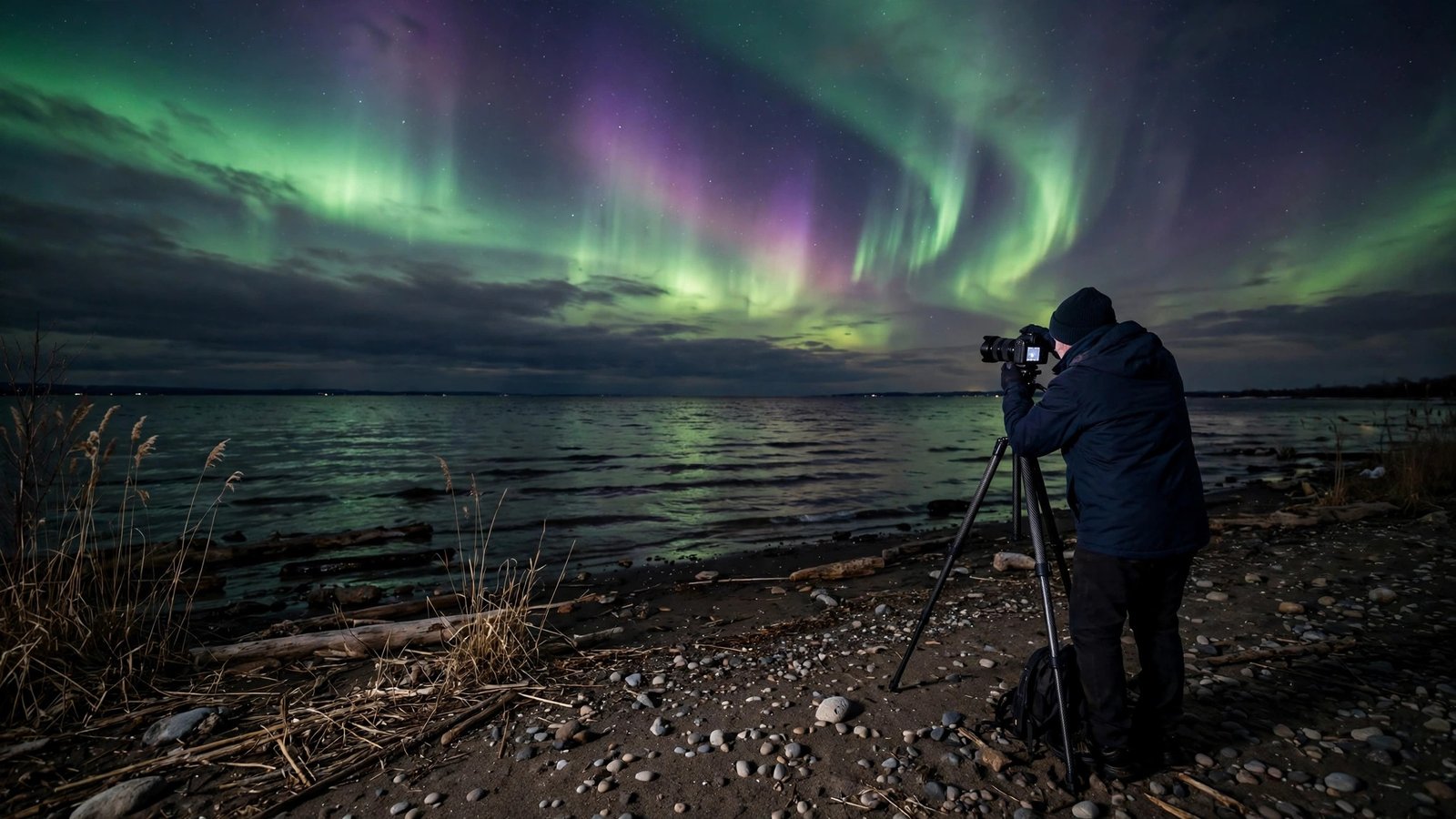
The Best Places to Watch the Northern Lights in Ohio
Dark skies and a clear view to the north are everything. Ohio’s best aurora spots share those two traits:
- Headlands Beach State Park (Mentor): an International Dark Sky Park with wide-open views over Lake Erie — your northern horizon is unobstructed water. Arguably Ohio’s best aurora vantage point.
- Maumee Bay State Park (near Toledo): Lake Erie shoreline with dark skies and easy access from the northwest Ohio metro areas.
- Lake Erie Bluffs (Lake County): elevated overlooks with a clean northern sightline across the lake.
- Geauga Observatory Park: Ohio’s designated dark-sky park in Geauga County, built for exactly this kind of skywatching.
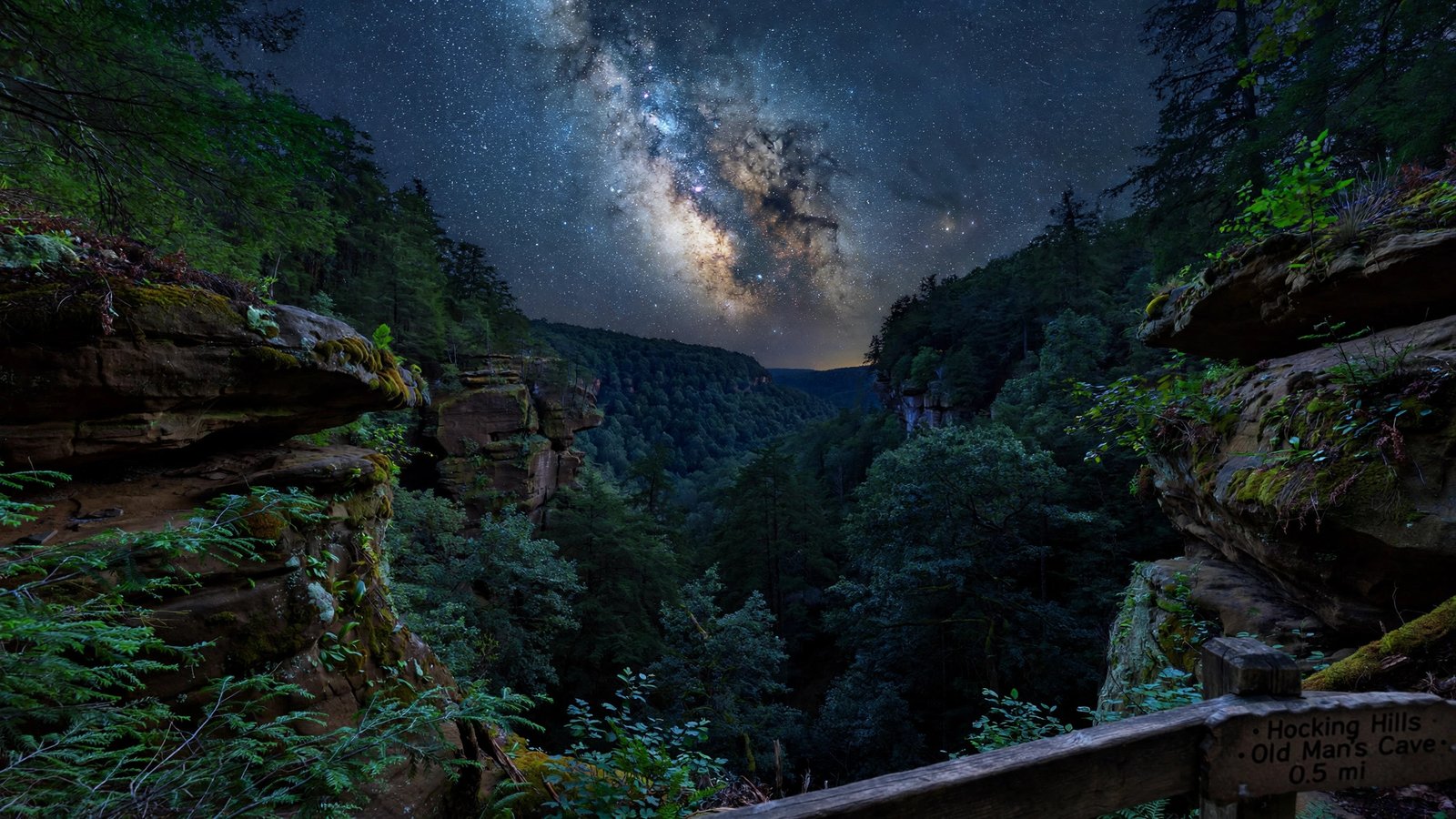
- John Glenn Astronomy Park (Hocking Hills): a purpose-built astronomy park in one of Ohio’s darkest regions, with sky programming throughout the year.
- Kelleys Island: the Lake Erie island puts miles of water between you and mainland light pollution.
The pattern is clear: the Lake Erie shore wins because it gives you the darkest possible northern horizon — and the horizon is where Ohio’s aurora usually appears. Get away from city lights, face north, and give your eyes at least 20 minutes to adapt to the dark.
Northern Lights Ohio: Best Months and Best Hours
Aurora hunting has a season and a schedule. In Ohio:
- Best months: October through March. Longer nights give you more darkness to work with, and the weeks around the spring and autumn equinoxes (late September and late March) are statistically the most active for geomagnetic storms — a real, measured effect of how Earth’s magnetic field aligns with the solar wind.
- Best hours: 10 PM to 2 AM. That’s when the sky is darkest and when the auroral oval typically swings to its most favorable position for North America. The hours around midnight are prime.
- Best conditions: clear skies (check the forecast), a new moon or a moon that sets early, and Kp 7 or higher in the forecast.
Weather is the great spoiler in Ohio — a Kp 8 storm under solid cloud cover might as well not exist. Check cloud forecasts before driving out, and have a backup date in mind.
How to Forecast the Aurora
Don’t guess — check the forecast. The NOAA Space Weather Prediction Center publishes the authoritative 3-day aurora outlook, including the Kp forecast and the view-line map showing how far south the aurora may reach. Here’s how to use it:
- Check the 3-day forecast for predicted Kp values. Anything hitting Kp 7 or above during Ohio nighttime hours is your green light.
- Look at the 30-minute aurora forecast (Ovation model). NOAA’s live map shows the auroral oval in near-real time — if the green band dips toward the Great Lakes, get outside.
- Follow space weather alerts. NOAA issues G-scale storm watches (G1 through G5) the same way weather services issue storm watches — a G3 watch means Ohio has a real shot.
Several phone apps also push aurora alerts based on the same NOAA data, which is handy if you don’t want to watch the forecast yourself. Just remember that apps are only as good as the data — NOAA is the source everything else draws from.
Photography Tips: Your Camera Sees More Than You Do
Here’s the open secret of aurora hunting in Ohio: a camera on a tripod will catch the northern lights before your eyes do. Digital sensors pick up colors that are too faint for human night vision, especially the reds and purples of a moderate storm. Even during the May 2024 storm, many Ohioans saw only a grayish glow at first — then looked at their phone photos and gasped.
- Use a tripod — exposures of 5–15 seconds are standard.
- Set the widest aperture your lens allows and ISO 1600–3200 to start.
- Focus manually on a distant light or a bright star; autofocus fails in the dark.
- Point your camera north and slightly up, even if you can’t see anything yet — the camera may find the aurora first.
If the sky does light up, resist the urge to only photograph it. The best northern lights memory is the one you watched with your own eyes, phone in your pocket, for at least a few minutes.
Aurora season overlaps nicely with Ohio’s fall foliage season, so plan a dark-sky weekend: chase colorful leaves by day from a spot like Hocking Hills or the Lake Erie shore, then stay up for the sky show after dark. October nights give you the year’s best combination of long darkness, crisp air, and solar-max storm odds.
